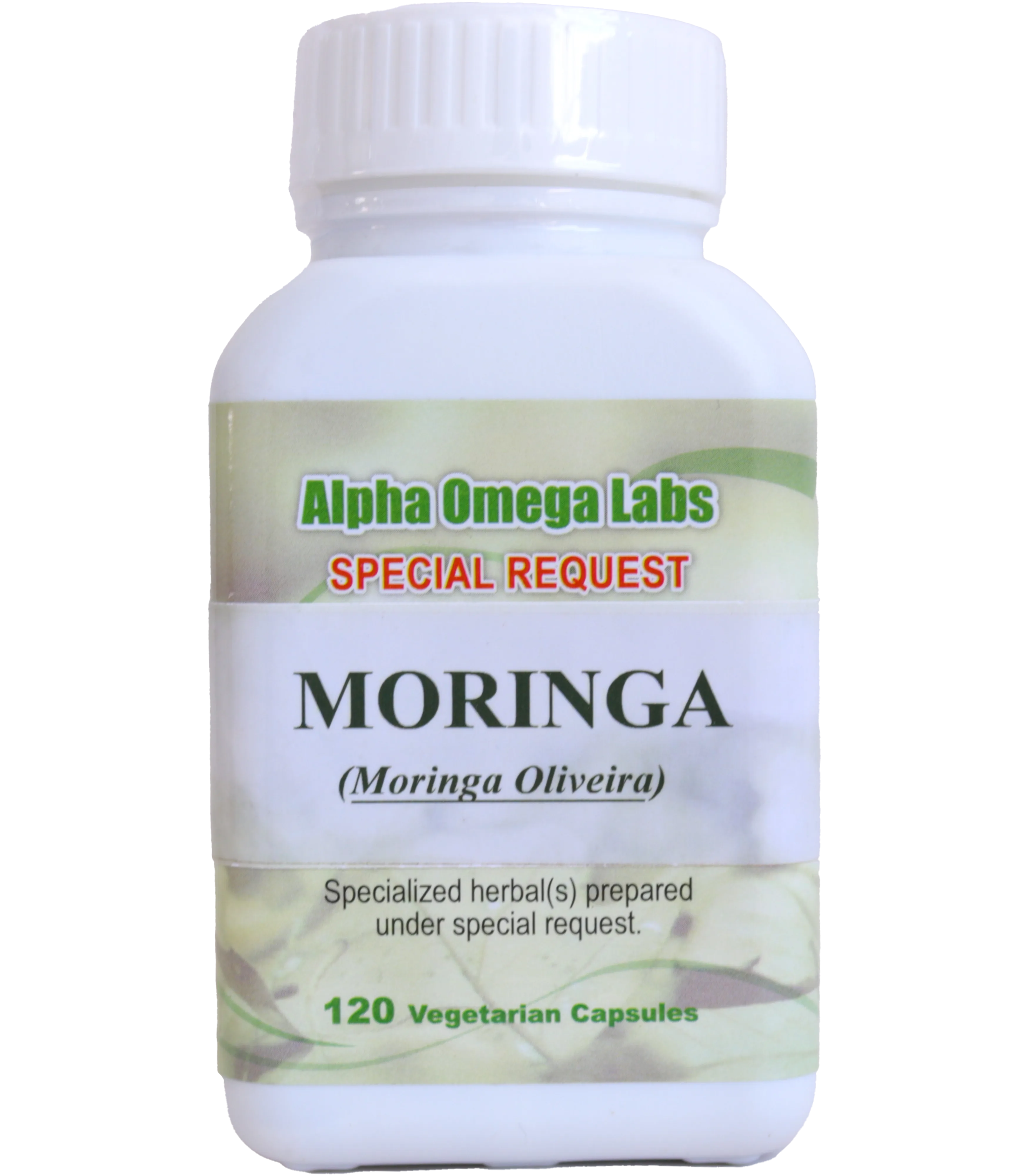
Moringa - 120 Capsules x 500mg
Always consult your healthcare provider before starting any new herbal protocol.
Moringa (Moringa oleifera) - Nutritional "Superfood"
Summarized Description: Moringa oleifera, also known as "drumstick tree" or "horseradish tree," is a veritable "superfood," loaded with nutrients -- offering tremendous benefits above and beyond its traditional applications in herbal medicine. Native to the Himalayas in northwestern India, Moringa now has broad geographic distribution, is drought-resistant, fast-growing, vigorous, for which there are uses for all its parts: leaves, pods, seeds, bark, and root.
Geographic Distribution: Moringa has widespread geographic distribution throughout Central and South America, Africa, and Southern Asia.
Nutritional Profile: Moringa has the broadest nutritional profile of any plant we have ever worked with. According to author Sanford Holst ("Moringa: Nature's Medicine Cabinet," p.12), it has been found to contain, by weight, seven times more Vitamin C than oranges, four times the Vitamin A of carrots, three times the iron of spinach, four times as much calcium as milk, and three times the potassium of bananas. Though the term has been overused, Moringa really is a veritable "superfood." You will find variances on these figures, based on the studies relied on, but -- regardless -- the nutritional figures are impressive :
Uses & Protocols
Capsules: Unless otherwise directed by your health care professional, take two (2) capsules, two times a day for general nutritional support. (This general instruction amounts to approximately 2,000 mg. per day intake.)
Tea: Add one Tablespoon (15 ml.) to a quart (or liter) of boiling water. (You may elect to prorate to the larger amount.) Let simmer for 20 minutes. After cooling, you can refrigerate the tea. Consume one 10 oz. (290 ml.) glass, once per day. Sweeten with stevia, honey, rubusoside, monk sugar, or other natural sweetener to taste.
Warnings & Contraindications: "To date, absolutely no negative side effects to even daily consumption of Moringa have been recorded." (SAH:21) Note that this referring to the consumption of the leaves, primarly. The flowers as said to be abortifacient, so these should be avoided by women who are attempting to conceive, or women who are already pregnant.
Shelf-Life: Five years or more.
Medicinal Activities
The following list of medical properties is taken from a variety of sources, studies, and publications. Note that both medicinal activities and indications are provided alphabetically below. See bibliographical references to see the references cited with the 3-digit codes below. Note that since different parts of the plant exhibit different properties (i.e. leaves, flowers, pods, roots, root and stem bark, gum, and seeds), we segregate these in the notes, where applicable, in addition to occasional listing of specific geographic regions or countries where the medical property listed is recognized.
